Kali Mandir Satsang
Swami Bhajanananda
Episodes

Apr 2, 2026
Apr 2, 2026
1hr 22 min
Discourse by Revered Dr. Swami Bhajanananda Saraswati given on 28 March 2026 at Kali Mandir Ramakrishna Ashram. Swamiji continues his series on the Principles of Bhakti Yoga, reading from the teachings of Narada Muni from the Srimad Bhagavatam, Skanda 51, Discourse 5 (translation by Swami Bhajanananda):
1.5.8
śrī-nārada uvāca
bhavatānudita-prāyaḿ yaśo bhagavato 'malam
yenaivāsau na tuṣyeta. manye tad darśanaḿ khilam
Sri Narada said:
"You have not praised the stainless glories of Bhagavan. This does not satisfy Him. I think such philosophy incomplete."
1.5.9
yathā dharmādayaś cārthā. muni-varyānukīrtitāḥ
na tathā vāsudevasya mahimā hy anuvarṇitaḥ
"You have repeatedly described dharma and the rest (dharma, kama, artha, moksha) as the goals, but although a great sage, have not described the glories of Vāsudeva."
1.5.10
na yad vacaś citra-padaḿ harer yaśo. jagat-pavitraḿ pragṛṇīta karhicit
tad vāyasaḿ tīrtham uśanti mānasā. na yatra haḿsā niramanty uśik-kṣayāḥ
"Words, however beautiful, that do not describe the glories of Hari, which purify the world, are places of pilgrimage to crows, and not to swans who take pleasure in transcendental bliss."
1.5.11
tad-vāg-visargo janatāgha-viplavo
yasmin prati-ślokam abaddhavaty api
nāmāny anantasya yaśo 'ńkitāni yat
śṛṇvanti gāyanti gṛṇanti sādhavaḥ
"But those words, however badly composed each verses is, that describe the names etc (name, form, abode, qualities, activities) of the Infinite, destroy the sins of all people. Such words are heard, sung, and accepted by sadhus."
Mar 21, 2026
Mar 21, 2026
2hr 16 min
Revered Dr. Swami Bhajanananda Saraswati continues his series on the Principles of Bhakti Yoga, reading from the teachings of Kapila Muni in the Srimad Bhagavatam, Skanda 3, Discourse 28 (translation by Swami Bhajanananda):
1. śrī-bhagavān uvācayogasya lakṣaṇaṁ vakṣyesabījasya nṛpātmajemano yenaiva vidhināprasannaṁ yāti sat-patham
The Blessed Lord said:"O princess, I shall describe the authorized system of yoga, by the practice of which one’s mind becomes joyful and advances on the path of Truth."
2. sva-dharmācaraṇaṁ śaktyāvidharmāc ca nivartanamdaivāl labdhena santoṣaātmavic-caraṇārcanam
"One must perform one’s dharma with all one’s strength and avoided prohibited actions. One should be satisfied with what one has through destiny and worship the lotus feet of the Self-realized."
3. grāmya-dharma-nivṛttiś camokṣa-dharma-ratis tathāmita-medhyādanaṁ śaśvadvivikta-kṣema-sevanam
"Giving up worldly activities one should then develop a taste for activates that lead to liberation. One should always eat pure food in moderation and stay in a secluded and peaceful dwelling."
4. ahiṁsā satyam asteyaṁ yāvad-artha-parigrahaḥbrahmacaryaṁ tapaḥ śaucaṁsvādhyāyaḥ puruṣārcanam
"One should practice nonviolence, truthfulness, non-stealing, possessing only what is necessary, celibacy, austerity, cleanliness, self-study, and worship of the Supreme Person."
5. maunaṁ sad-āsana-jayaḥsthairyaṁ prāṇa-jayaḥ śanaiḥpratyāhāraś cendriyāṇāṁviṣayān manasā hṛdi
"One should practice silence, attain mastery of a proper and steady posture, control the breath/prana, gradually withdraw the senses from sense-objects, and focus the mind on the heart."
6. sva-dhiṣṇyānām eka-deśemanasā prāṇa-dhāraṇamvaikuṇṭha-līlābhidhyānaṁsamādhānaṁ tathātmanaḥ
"One should fix the mind and prana in one place in a chakra in the body and meditate upon the pastimes of Lord of Vaikunta and thus become absorbed in the self."
7. etair anyaiś ca pathibhirmano duṣṭam asat-pathambuddhyā yuñjīta śanakairjita-prāṇo hy atandritaḥ
"By these and other ways this wicked mind on the path of illusion must be gradually controlled by the intelligence and one’s prana should be carefully focused."
8. śucau deśe pratiṣṭhāpyavijitāsana āsanamtasmin svasti samāsīnaṛju-kāyaḥ samabhyaset
"Spreading a proper seat in a pure place and sitting in an easy posture, with body erect , engage in practice."
9. prāṇasya śodhayen mārgaṁpūra-kumbhaka-recakaiḥpratikūlena vā cittaṁyathā sthiram acañcalam
"One should purify the passages of prana by inhaling, retaining and exhaling and then reversing the process , thus making the mind-stuff (cittam yathā) steady and unwavering."
10. mano ’cirāt syād virajaṁjita-śvāsasya yoginaḥvāyv-agnibhyāṁ yathā lohaṁdhmātaṁ tyajati vai malam
"When a yogi’s breath is thus controlled then the mind is soon freed from disturbance, just like gold in an air-fanned fire becomes free of impurities."
11. prāṇāyāmair dahed doṣāndhāraṇābhiś ca kilbiṣānpratyāhāreṇa saṁsargāndhyānenānīśvarān guṇān
"Through pranayama, one overcomes faults; by concentration, sins; by withdrawal of the mind, worldliness; and by meditation, ungodly qualities."
12. yadā manaḥ svaḿ virajaḿyogena susamāhitamkāṣṭhāḿ bhagavato dhyāyetsva-nāsāgrāvalokanaḥ
"When one’s mind is purified by yoga, gazing at the tip of the nose, with full concentration one should meditate upon the Supreme Lord."
____________
34. evaḿ harau bhagavati pratilabdha-bhāvobhaktyā dravad-dhṛdaya utpulakaḥ pramodātautkaṇṭhya-bāṣpa-kalayā muhur ardyamānastac cāpi citta-baḍiśaḿ śanakair viyuńkte
T"hus one will develop intense love for Bhagavan Hari, the heart will melt, hairs stand erect from excessive joy and tears will flow constantly from one’s eyes due to longing . Thus overcome , the mind, which has acted as a hook, begins to withdraw."
Mar 14, 2026
Mar 14, 2026
2hr 29 min
Rev. Dr. Swami Bhajanananda Saraswati continues his series of discourses on the Principles of Bhakti Yoga, followed by arati and Ramnam Sankirtan. Swamiji expands on the pillars of dharma discussed in last week's class, focusing on truthfulness, compassion, desire, and company.
Feb 28, 2026
Feb 28, 2026
1hr 57 min
Rev. Dr. Swami Bhajanananda Saraswati continues his series of discourses on the Principles of Bhakti Yoga, followed by arati and kirtan. Swamiji expands on the pillars of dharma discussed in last week's class, and expands on tapasya (austerity/self-discipline); the Yamas & Niyamas; austerities of the body, speech, and mind; and truthfulness.
Feb 21, 2026
Feb 21, 2026
2hr 16 min
Rev. Dr. Swami Bhajanananda Saraswati begins a new series of discourses on the "Principles of Bhakti Yoga.", followed by arati and kirtan.
This class focuses on a story in the Srimad Bhagavatam about the bull of dharma and the cow of Earth being attached by the demon Kali, the personification of the adharma of Kali Yuga. Swamiji reads and discusses chapters 17 and 18 of Skanda I, and then focuses on some important verse given below:
ŚB 1.17.24राजोवाचतप: शौचं दया सत्यमिति पादा: कृते कृता: ।
अधर्मांशैस्त्रयो भग्ना: स्मयसङ्गमदैस्तव ॥ २४ ॥rājovācatapaḥ śaucaṁ dayā satyam iti pādāḥ kṛte kṛtāḥ
adharmāṁśais trayo bhagnāḥ smaya-saṅga-madais tavaThe King (Parikshit) said:"In Satya Yuga your four legs were established as austerity (tapaḥ), purity (śaucaṁ), compassion (dayā), and truthfulness (satyam). But it appears that three of your legs have been broken by adharma in the form of pride (smaya), attachment (saṅga), and blinding passion (madaiḥ)."
ŚB 1.17.25इदानीं धर्म पादस्ते सत्यं निर्वर्तयेद्यत: ।
तं जिघृक्षत्यधर्मोऽयमनृतेनैधित: कलि: ॥ २५ ॥idānīṁ dharma pādas te satyaṁ nirvartayed yataḥ
taṁ jighṛkṣaty adharmo ’yam anṛtenaidhitaḥ kaliḥ"At present, O Dharma, you are standing on one leg only, which is truthfulness (satyam), and you are somehow or other hobbling along. But Kali, the personification of adharma, is trying to destroy this leg by dishonesty (anṛtena)."
ŚB 1.17.38सूत उवाच
अभ्यर्थितस्तदा तस्मै स्थानानि कलये ददौ ।
द्यूतं पानं स्त्रिय: सूना यत्राधर्मश्चतुर्विध: ॥ ३८ ॥sūta uvāca
abhyarthitas tadā tasmai sthānāni kalaye dadau
dyūtaṁ pānaṁ striyaḥ sūnā yatrādharmaś catur-vidhaḥSūta said:"Thus petitioned, he (Parikshit) gave Kali permission to reside where there are the four kinds of adharma: gambling (dyūtam), drinking (pānam), womanizing (striyaḥ), and animal slaughter (sūnā)."
ŚB 1.17.39पुनश्च याचमानाय जातरूपमदात्प्रभु: ।
ततोऽनृतं मदं कामं रजो वैरं च पञ्चमम् ॥ ३९ ॥punaś ca yācamānāya jāta-rūpam adāt prabhuḥ
tato ’nṛtaṁ madaṁ kāmaṁ rajo vairaṁ ca pañcamam"[Kali] asked for something more, and because of his begging, the king gave him permission to live where there is gold (jāta-rūpam), because wherever there is gold, there is also deceit (anṛtam), intoxication (madam), lust (kāmam), cruelty (rajaḥ), and enmity (vairam) the fifth."
ŚB 1.17.41अथैतानि न सेवेत बुभूषु: पुरुष: क्वचित् ।
विशेषतो धर्मशीलो राजा लोकपतिर्गुरु: ॥ ४१ ॥athaitāni na seveta bubhūṣuḥ puruṣaḥ kvacit
viśeṣato dharma-śīlo rājā loka-patir guruḥ"Therefore, whoever desires their own welfare, those who aspire to be virtuous, kings, public leaders, and gurus, should never encounter these under any circumstance."
Jul 5, 2025
Jul 5, 2025
2hr 7 min
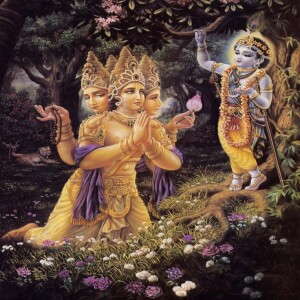
Class by Rev. Dr. Mahant Swami Bhajanananda Saraswati on Book X, chapter 13, verses 6 - 8 of Srimad Bhagavatam given at Kali Mandir Ramakrishna Ashram on 21 June 2025.
Brahma said:
तथापि भूमन् महिमागुणस्य ते विबोद्धुम् अर्हत्य् अमलान्तरात्मभिः |
अविक्रियात् स्वानुभवाद् अरूपतो ह्य् अनन्यबोध्यात्मतया न चान्यथा || ६ ||
tathāpi bhūman mahimāguṇasya te viboddhum arhaty amalāntar-ātmabhiḥ |
avikriyāt svānubhavād arūpato hy ananya-bodhyātmatayā na cānyathā || 6 ||
6. "Nevertheless, Oh Infinite One (tathāpi bhūman), Your infinite nature beyond the gunas (mahimā aguṇasya te), changeless (avikriyāt), formless (arūpataḥ), and self-effulgent (hi ananya bodhya can be known by self realization (ātmatayā viboddhum) by one whose mind and senses are pure and in-drawn (arhati amala antar-ātmabhih), through one's own direct perception (sva anubhava), and not otherwise (na ca anyathā)."
गुन्̣आत्मनस् तेऽपि गुन्̣आन् विमातुं हितावतीर्̣नस्य क ईशिरेऽस्य |
कालेन यैर् वा विमिताह्̣ सुकल्पैर् भूपांशवह्̣ खे मिहिका द्युभासह्̣ || ७ ||
guṇātmanas te 'pi guṇān vimātuḿ hitāvatīṛnasya ka īśire 'sya |
kālena yair vā vimitāḥ su-kalpair bhū-pāḿśavaḥ khe mihikā dyu-bhāsaḥ || 7 ||
7. "Oh Self of the gunas (guṇa-ātmanaḥ), to count Your qualities ( te api guṇān vimātum) -- You who have incarnated for the good of all ( hita-avatīrṇasya ) -- is like a geniuses, for all eternity, counting (asya kālena yaiḥ vā vimitāḥ su-kalpaiḥ) all the grains of sand on the earth (bhū-pāḿśavaḥ), all water drops in the air ( khe mihikāḥ), and all the stars in the sky (dyu-bhāsaḥ)."
तत् ते ऽनुकम्पां सुसमीक्स्̣अमान्̣ओ भुञ्जान एवात्मक्र्̣तं विपाकम् |
ह्र्̣द्वाग्वपुर्भिर् विदधन् नमस् ते जीवेत यो मुक्तिपदे स दायभाक् || ८ ||
tat te 'nukampāṃ su-samīkṣamāṇo bhuñjāna evātma-kṛtaṃ vipākam |
hṛd-vāg-vapurbhir vidadhan namas te jīveta yo mukti-pade sa dāya-bhāk || 8 ||
8. "Therefore (tat) whoever lives (jīveta yaḥ) depending upon Your compassion (te anukampām su-samīkṣamāṇaḥ), tolerating the results of their own actions (bhuñjānaḥ eva ātma-kṛtam vipākam) and surrendering to You with heart, words and body (hṛt vāk vapurbhiḥ vidadhan namaḥ te), becomes the rightful heir of liberation (mukti-pade saḥ dāya-bhāk)."
Jun 20, 2025
Jun 20, 2025
1hr 56 min
Class by Rev Dr. Mahant Swami Bhajanananda Saraswati on Book X of Srimad Bhagavatam given at Kali Mandir Ramakrishna Ashram on 14 June 2025.
Brahma said:
ज्ञाने प्रयासम् उदपास्य नमन्त एव जीवन्ति सन्मुखरितां भवदीयवार्ताम् |स्थाने स्थिताह्̣ श्रुतिगतां तनुवाङ्मनोभिर्ये प्रायशोऽजित जितोऽप्य् असि तैस् त्रिलोक्याम् || ३ ||jñāne prayāsam udapāsya namanta evajjīvanti sanmukharitāṃ bhavadīyavārtām |sthāne sthitāḥ śrutigatāṃ tanuvāṅmanobhirye prāyaśo'jita jito'py asi tais trilokyām || 3 ||3. "Those who give up the path of knowledge (jñāne prayāsam udapāsya) and simple bow to You (namantaḥ eva), spending their lives hearing about You from the lips of saints (jīvanti sat-mukharitām bhavadīya-vārtām), in whatever condition they are (sthāne sthitāḥ), meditate on what they heard with their body, speech, and mind (śruti-gatām tanu vāk manobhiḥ ye prāyaśaḥ)-- Oh Unconquerable One (ajita), You are conquered by them in the three worlds (jitaḥ api asi taiḥ tri-lokyām).
श्रेयह्̣स्र्̣तिं भक्तिम् उदस्य ते विभोक्लिश्यन्ति ये केवलबोधलब्धये |तेस्̣आम् असौ क्लेशल एव शिस्̣यतेनान्यद् यथा स्थूलतुस्̣आवघातिनाम् || ४ ||śreyaḥ-sṛtiṃ bhaktim udasya te vibhokliśyanti ye kevala-bodha-labdhaye |teṣām asau kleśala eva śiṣyatenānyad yathā sthūla-tuṣāvaghātinām || 4 ||4. "There are some who reject the auspicious path of bhakti (śreyaḥ sṛtim bhaktim udasya). They struggle to know You, Oh Lord, with their minds alone (te vibho kliśyanti ye kevala bodha). The only thing they achieve is that struggle (labdhaye teṣām asau kleśalaḥ eva) and nothing more (na anyat). It is just like beating empty husks (yathā sthūla-tuṣa avaghātinām)."
पुरेह भूमन् बहवोऽपि योगिनस्त्वदर्पितेहा निजकर्मलब्धया |विबुध्य भक्त्यैव कथोपनीतयाप्रपेदिरेऽञ्जोऽच्युत ते गतिम्́ पराम् || ५ ||pureha bhūman bahavo'pi yoginastvad-arpitehā nija-karma-labdhayā |vibudhya bhaktyaiva kathopanītayāprapedire'ñjo'cyuta te gatiḿ parām || 5 ||5. "In the past, O Infinite One (purā iha bhūman), many yogis (bahavaḥ api yoginaḥ) offered whatever they did to You (tvat arpita īhāḥ nija-karma), and through bhakti cultivated by hearing about You (labdhayā vibudhya bhaktyā eva kathā-upanītayā), easily surrendered to You, Oh Infalliable One (prapedire añjaḥ acyuta) and attained You, the supreme goal (te gatim parām)."
Jun 18, 2025
Jun 18, 2025
1hr 51 min
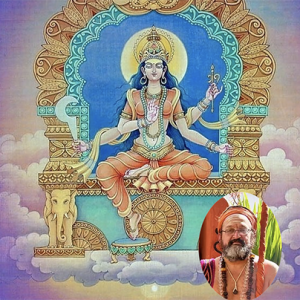
Scripture class by Rev. Dr. Swami Bhajanananda Saraswati on Devi Gita, chapter 2, verses 27-34, given to students of the Ramakrishna Seminary at Kali Mandir via Zoom on 18 June 2025.
The Goddess said:
तस्मादाकाश उत्पन्नः शब्दतन्मात्ररूपकः |भवेत् स्पर्शात्मको वायुस्तेजोरूपात्मकं पुनः || २७ ||tasmādākāśa utpannaḥ śabda-tanmātra-rūpakaḥ |bhavet sparśātmako vāyus-tejo-rūpātmakaṃ punaḥ || 27 ||27. "Out of that primal substance arose ether, endowed with the subtle quality of sound. Then arose air, characterized by the quality of touch, followed by fire, characterized by visible form."
जलं रसात्मकं पशात् ततो गन्धात्मिका धरा |शब्दैकगुण आकासो वायुः स्पर्शरवानितः || २८ ||jalaṃ rasātmakaṃ paśāt tato gandhātmikā dharā |śabdaika-guṇa ākāso vāyuḥ sparśa-ravānitaḥ || 28 ||28. "Next arose water, characterized by taste; then earth, characterized by smell. Ether has the single quality of sound; air is endowed with touch and sound."
शब्दस्पर्शरूपगुणं तेज ईत्युच्यते बुधैः |शब्दस्पर्शरूपरसैरापो वेदगुणाः स्मृताः || २९ ||śabda-sparśa-rūpa-guṇaṃ teja ītyucyate budhaiḥ |śabda-sparśa-rūpa-rasairāpo veda-guṇāḥ smṛtāḥ || 29 ||29. "Fire has the qualities of sound, touch, and visible form, according to the wise; water has the four qualities of sound, touch, visible form, and taste, so they say."
शब्दस्पर्शरूपरसगन्धैः पञ्चगुणा धरा |तेभ्योऽभवन् महत्सूत्रं यल्लिण्गं परिचक्षते || ३० ||śabda-sparśa-rūpa-rasa-gandhaiḥ pañca-guṇā dharā |tebhyo'bhavan mahat-sūtraṃ yal-liṇgaṃ paricakṣate || 30 ||30. "Earth has the five qualities of sound, touch, visible form, taste, and smell. From those subtle elements came into being the great cosmic thread which is called the Subtle Body."
सर्वात्मकं तत्सम्प्रोक्तं सूक्ष्मदेहोऽयमात्मनः |अव्यत्क्तं कारणो देहः स चोक्तः पूर्वमेव हि || ३१ ||sarvātmakaṃ tat-samproktaṃ sūkṣma-deho’yamātmanaḥ |avyatktaṃ kāraṇo dehaḥ sa coktaḥ pūrvameva hi || 31 ||31. "It is proclaimed as all-pervading; this is the Subtle Body of the Self.The Unmanifest is the Causal Body, which I mentioned earlier."
यस्मिन् जगद्बीजरूपं स्थितं लिङ्गोद्भवो यथः |ततः स्थूलानि भूतानिपञ्चिकरणमागतः || ३२ ||yasmin jagad-bīja-rūpaṃ sthitaṃ liṅgodbhavo yathaḥ |tataḥ sthūlāni bhūtāni-pañcikaraṇa-māgataḥ || 32 ||32. "In that lies the world seed, from which evolves the Subtle Body. From that, by the process of fivefold generation, the gross elements,"
पञ्चसङ्ख्यानि जायन्ते तत्प्रकारस्त्वथोच्यते |पूर्वोक्तानि च भूतानि प्रत्यकं विभजेद् द्विधा || ३३ ||pañca-saṅkhyāni jāyante tat-prakāra-stvathocyate |pūrvoktāni ca bhūtāni pratyakaṃ vibhajed dvidhā || 33 ||33. "Five in number, arise. I shall now describe this process. Each of those elements previously mentioned shall be divided in half."
एकैकं भागमेकस्य चतुर्धा विभजेद् गिरे |स्वस्वतरद्वितीयांशे योजनात् पञ्च ते || ३४ ||ekaikaṃ bhāgamekasya caturdhā vibhajed gire |svasvataradvitīyāṃśe yojanāt pañca te || 34 ||34. "One half-part of each element shall be divided into four, O Mountain. By joining the undivided half of each element with one of the quartered fractions from each of the other four, each element becomes five-fold."
तत्कार्यं च विराड्देहः स्थूलदेहोऽयमात्मनः | tat-kāryaṃ ca virāḍ-dehaḥ sthūla-deho’yamātmanaḥ |34. "And they produce the Cosmic Body, or Gross Body, of the Self."
May 28, 2025
May 28, 2025
1hr 45 min
Scripture class by Rev. Dr. Swami Bhajanananda Saraswati on Devi Gita, chapter 2, verses 22-26, given to students of the Ramakrishna Seminary at Kali Mandir via Zoom on 28 May 2025.
स पुनः कामकर्मादियुक्तया स्रीयमायया |
पूर्वानुभूतसंस्कारात् कालकर्मविपाकतः || २२ ||
sa punaḥ kāma-karmādi-yuktayā srīyamāyayā |
pūrvānubhūta-saṃskārāt kāla-karma-vipākataḥ || 22 ||
22. "This Self, however, by its own power of Maya conjoined with desires, actions, and the like, through the influence of prior experience ripening in time in accord with the law of karma, ..."
अविवेकाच्च तत्त्वस्य सिसृक्षावान् प्रजायते |
अबुद्धिपूर्वः सर्गोऽयं कथितस्ते नगाधिप || २३ ||
avivekāc-ca tattvasya sisṛkṣāvān prajāyate |
abuddhi-pūrvaḥ sargo'yaṃ kathitaste nagādhipa || 23 ||
23. "And by confounding the primal elements, being desirous to create, begins to bring forth. The resulting creation, devoid of intelligence, will be further described to you, O Mountain King."
एतद्धि यन्मया प्रोक्तं मम रूपमलौकिकम् |
अव्याकृतं तदव्यक्तं मायाशबलमित्यपि || २४ ||
etaddhi yanmayā proktaṃ mama rūpa-malaukikam |
avyākṛtaṃ tadavyaktaṃ māyāśabalamityapi || 24 ||
24. "This extraordinary form of mine which I have mentioned is unevolved and unmanifest, yet becomes segmented through the power of Maya."
प्रोच्यते सवशास्त्रेषु सर्वकारणकारणम् |
तत्त्वानामादिस्भूतं च सच्चिदानन्दविग्रहम् || २५ ||
procyate sava-śāstreṣu sarva-kāraṇa-kāraṇam |
tattvā-nāmādis-bhūtaṃ ca sac-cid-ānanda-vigraham || 25 ||
25. "All the religious treatises declare it to be the cause of all causes, The primal substance behind the elements, and as having the form of being, consciousness, bliss."
सर्वकर्मघनीभूतमिच्छाज्ञानक्रियाश्रयम् |
ह्रीङ्कारमन्त्रवाचयं तदादितत्त्वं तदुच्यते || २६ ||
sarva-karma-ghanī-bhūtam-icchā-jñāna-kriyā-śrayam |
hrīṇ-kāra-mantra-vācayaṃ tadādi-tattvaṃ taducyate || 26 ||
26. "It is the condensation of all karma; it is the seat of will, knowledge, and action; it is expressed in the mantra Hrim; it is the primal principle—so it is said."
Apr 19, 2025
Apr 19, 2025
1hr 42 min
Class by Rev Dr. Swami Bhajanananda Saraswati on Book X of Srimad Bhagavatam introducing the story of Brahma stealing the cows and cowherd boya given at Kali Mandir Ramakrishna Ashram on 19 May 2025.